


Flat Rate Shipping
$9.95 flat rate shipping or free over $110

Aussie Owned
Australian family-owned & sourced

School Supplier
Supplier to over 1,000 schools Australia wide
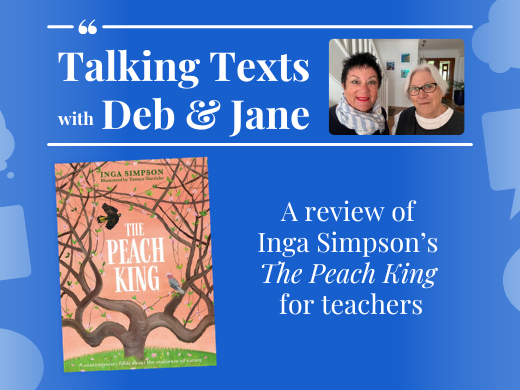
For Stage 3
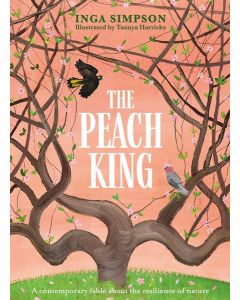
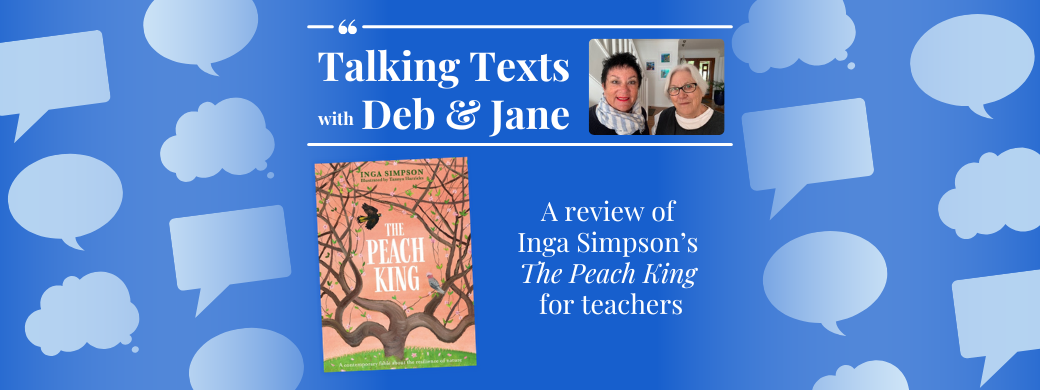
The picture book has a fond place in the hearts of all of us and as a literary form it is one of the oldest and certainly, one of the most enduring. But it is also one of the most versatile in its appeal to a wide range of ages and interests. Indeed, the picture book stands tall as a style for all ages in its capacity to resonate and inspire. Australia has some of the finest creators of picture books in the publishing world. As readers mature, develop their literacy skills and are engaged by the world around them many picture books reward revisiting. The unique combination of image and words where neither is giving more privilege is an important feature. The images are intrinsic to the words and the words inspire and feed the images. The Peach King is one of those masterful creations which has appeal across a range of stages and may be the start for your Stage 3 readers to explore the vast trove of compelling, thought-provoking and poignant picture books which are now available.
Recently in The Guardian Sally Rippin wrote an excellent article which celebrates the power of picture books in developing literacy, especially in reading aloud to children:
Unlike most books, picture books are primarily created to read aloud. Along with being a lovely way to connect with a child, reading aloud is a vital first step to developing literacy. It expands vocabulary, enhances brain development and develops what is called “phonological awareness” – helping children become familiar with rhythms and patterns in language. Research shows that regularly reading aloud to your child from a young age gives them a clear advantage when they start school.
I would take this further and emphasise the role that picture books have in developing higher order skills of critical literacy especially in awareness of environmental issues, building empathy and expanding a broader worldview. The Peach King is one of these picture books and it is a book for its time. Every January Australia is reminded of its precarious and fragile nature. Soaring and searing temperatures, destructive fires and intense storm systems have become normalised which increases the need for awareness, understanding and action to help our fragile environment.
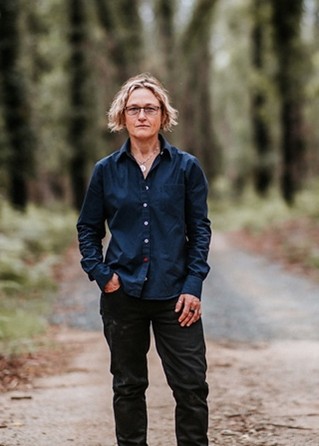
Inga Simpson is an Australian novelist whose key interest is writing about nature. Inga was born in central west NSW. After living in Canberra, Brisbane, and the Sunshine Coast hinterland, she has settled on the far south coast of NSW. Inga began her career as a professional writer for government groups before gaining a PhD in creative writing. In 2011, she took part in the Queensland Writers Centre Manuscript Development Program and, as a result, Hachette Australia published her first novel, Mr Wigg, in 2013. Inga has since gained a second PhD, in English literature, which examined the history of Australian nature writing. Her short stories and essays have appeared in Chicago Quarterly Review, On this Ground: Best Australian Nature Writing, Wonderground, Review of Australian Fiction, Griffith Review, Clues and the Dictionary of Literary Biography. She was also the winner of the final Eric Rolls Nature Essay Prize. The Peach King was published in September 2025.
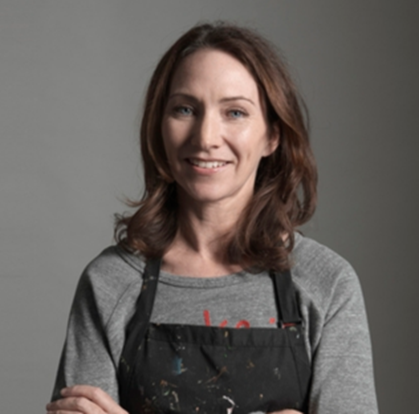
Tannya Harricks is an illustrator and artist who lives in Sydney. Her award-winning art practice draws inspiration from the Australian landscape, its animals and her love of adventure. Tannya studied Graphic Design and Illustration at Randwick TAFE and will soon complete a degree in Visual Culture at Curtin University. She has previously illustrated six picture books. Dingo was joint winner of the Patricia Wrightson Prize for Children's Literature at the NSW Premier's Literary Award (2019), won the Royal Zoological Society of NSW's Whitley Award (2018) and was shortlisted in 2019 for the CBCA New Illustrator Award as well as for Best Picture Book in the Educational Publishing Awards.
The Peach King is a compelling text. It has many layers and indeed has allegorical elements like a modern fable which adds to the book’s appeal and urgency to be read. Inga Simpson has written the words and the story is touching and relevant. The story opens as we meet Little Peach Tree as a sapling in a vast paddock of peach trees watched over by the Peach King. The Peach King is the protector of the orchard as it warns the others of changes in the weather or predators like grasshoppers. The narrative covers the seasons from the blossoms of spring, the rich, ripened abundance of its fruit in summer, the changes in autumn and bare and sleeping in winter. As the Little Peach Tree grows the natural world is in peril with drought, higher temperatures and bushfires. The Peach King is powerless to call up the rain and the intensity of the fire is powerfully rendered by Simpson’s words and Tannya Harrick’s compelling and evocative paintings. The Little Peach King finds its voice to turn the wind around and the orchard is saved but not The Peach King. But the glory which is nature is restored and “Little Peach Tree’s limbs grew and twisted - into a crown.”
Though framed as a fable, the story resonates deeply with contemporary anxieties about fire, drought, and ecological precarity. Yet Simpson offers more than a cautionary parable; she gives readers a vision of hope, renewal, and the enduring power of nature to speak, if only we are willing to listen.
The next day dawned red, the wind oven-hot
The trees’ leaves browned and withered
Distribute a few copies of The Peach King to groups so students can explore specific pages in depth. It would be very special to have a tray of ripe peaches for the students to enjoy at the end of the reading.
Background on the 2019-2020 catastrophic fires may be a valuable place to start especially the impact of the fires on native wildlife. While Stage 3 students are unlikely to have their own memories of this time, there have been subsequent examples of similarly devastating bushfires including January 2026 in Victoria.
A PowerPoint of different images and statistics could be a way to provide context and background. These could be included:
1. Extract from the Currowan -the story of fire and community during Australia’s worst summer by Bronwyn Adcock.
He’s still inside the house when he hears what sounds like a helicopter landing in his paddock…It’s a cyclonic wind, roaring up the gully towards his house…..Then a fireball comes out of the gully and jumps over his empty dam, and “everything just erupts into flames.
2. Access the WWF site (https://wwf.org.au/news/2020/3-billion-animals-impacted-by-australia-bushfire-crisis/) for details on the number of wildlife destroyed:
Nearly three billion animals – mammals, reptiles, birds, and frogs – were killed or displaced by Australia’s devastating 2019-20 bushfires. It’s almost three times an earlier estimate released in January. The breakdown is 143 million mammals, 2.46 billion reptiles, 180 million birds, and 51 million frogs.
The interim findings are shocking. It’s hard to think of another event anywhere in the world in living memory that has killed or displaced that many animals. This ranks as one of the worst wildlife disasters in modern history.
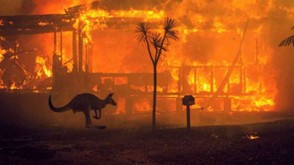
3. Images of fleeing wildlife which were used by international media outlets to cover the story:
The story opens with the orientation of place and the growth of Little Peach Tree with the Peach King, the leader of the peach orchard.
After reading the story, discuss the use of an Author’s note and why an author might want to add information and context about their story. Share the Author’s Note with the class: what are the three points in this Author’s Note which resonate with you?
Other writers and literature enthusiasts have commented about The Peach King: here are a few:
It’s a work that invites quiet reflection, reminding us of the interconnectedness of all living things, and the responsibility we share in protecting them.
“A modern classic . . . An exquisite book destined to be treasured by generations . . . Its timeless quality and gentle wisdom invite return visits, making it a rewarding and enduring read.” – Books + Publishing
'Simpson's writing is exquisite: spare, lyrical and deeply evocative. There is not a word wasted or out of place. Her story is perfectly matched with illustrations that sweep from corner to corner bringing the seasons alive. Together they create a timeless tale of growth, change and resilience . . . A book destined to become a classic' GOOD READING MAGAZINE
'A fable for our times - one that feels both timeless and urgent' AUSTRALIAN ARTS REVIEW
Task: In small groups, which review does your group think best captures the essence of The Peach King? In your group write your own review of 40-60 words and vote on the best and send it to the publisher: publicity@hachette.com.au
In small groups write another double page to fit with this story. Be sure to use similar word choices and sentence structures as Inga Simpson. For illustrations you could paint images like Tannya Harricks or choose some photographs or create a collage.
Suggested content:
Display your additional section and enjoy looking at what other groups have done. Contact Inga Simpson through her webpage and tell her what you have done and ask if you could send her your creations.
Bushfires have been the source of other powerful texts. Provide a few copies of these texts or ask the librarian to create a display for students to access.
Cobargo Public school collaborated on creating a picture book about the fires around them in the summer of 2019-2020. The book is called The Day She Stole the Sun and it is inspiring to see the creativity, insight and clever work achieved by these year 5/6 students and their teacher Campbell Kerr. It incorporates First Nations lore which adds a powerful richness to the story.
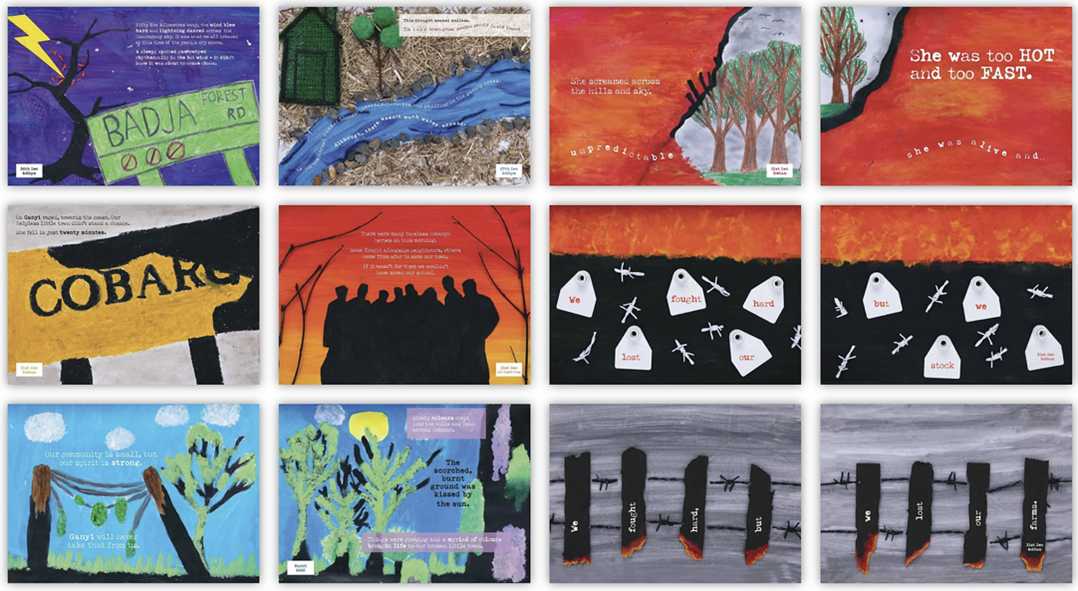
Students could choose to read one or two of these following texts and discuss their responses and comparison with The Peach King.
Bindi by Kirli Saunders. This is a wonderful verse novel with evocative line drawings. It provides important insights to First Nations attitudes to fire as well as exploring a community caught in a bush fire. I wrote blog on this which can be accessed from Five Senses (August 25 2023)
Spark was published in 2017 and is a collaboration between Adam Wallace and Andrew Plant.
The narrative follows a small spark in dry grass who is joined by the wind to “play.” At first their play is friendly and fun but soon the wind suggests the sparks “go even faster” and “with the wind at my back, I blasted through the tree tops.” But then it all changes and “it wasn’t fun anymore.” The devastation is powerfully rendered by the images and the bold, black font.
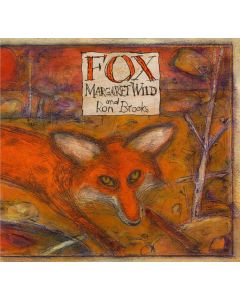
Fox is a delightful and very clever picture book published in 2004 and is a powerful collaboration by the talented Margaret Wild and Ron Brooks. This text explores nature and the seasonal changes and covers friendship, survival, cooperation in the characters of Dog, Magpie and Fox. There is a unit on Reading Australia and Margaret Wild and Ron Brooks discuss the making of the book on their website, and Allen and Unwin have published an outstanding and detailed teaching resource: https://s3-ap-southeast-2.amazonaws.com/dimo.allenunwin.com/assets/teaching_resource/9781864489330.pdf
Text requirements: Australian literature, hybrid texts
Concepts: representation • point of view • characterisation • connotation, imagery and symbol • genre
A student analyses representations of ideas in literature through narrative, character, imagery, symbol and connotation, and adapts these representations when creating texts EN3-UARL-01
A student analyses representations of ideas in literature through genre and theme that reflect perspective and context, argument and authority, and adapts these representations when creating texts EN3-UARL-02
Narrative
Characterisation
Imagery, symbol and connotation
Genre
Theme
Perspective and context
A student fluently reads and comprehends texts for wide purposes, analysing text structures and language, and by monitoring comprehension EN3-RECOM-01
Reading for interest and wide purposes
(English K-10 Syllabus 2022 © NSW Education Standards Authority for and on behalf of the Crown in right of the State of New South Wales, 2023)



Jane Sherlock and Deb McPherson are experienced and passionate English teachers. They have also been involved in the education sector as authors and presenters at teaching conferences.
$9.95 flat rate shipping or free over $110
Australian family-owned & sourced
Supplier to over 1,000 schools Australia wide