




Flat Rate Shipping
$9.95 flat rate shipping or free over $110

Aussie Owned
Australian family-owned & sourced

School Supplier
Supplier to over 1,000 schools Australia wide
For Stage 5
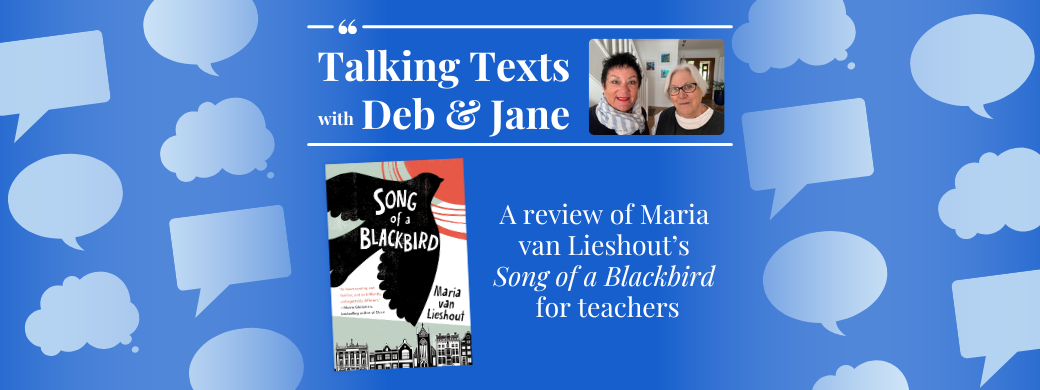
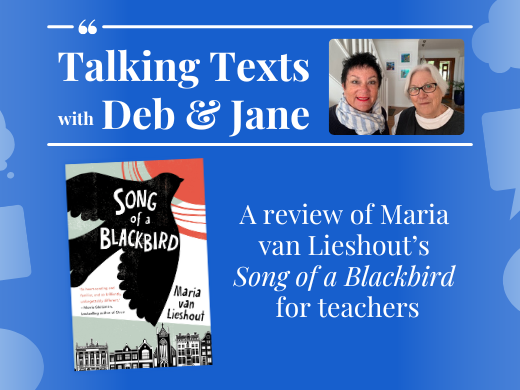
Sometimes I just want to read a text over and over as it speaks so powerfully and with such human pathos and poignancy. Song of a Blackbird is one such book and it has a real place in the Stage 5 program.
This graphic novel would be excellent in a unit exploring a range of texts representing human resilience especially in the challenging context of war. I recently attended a talk in Bordeaux, France about the French resistance and it was fascinating and disturbing. Song of a Blackbird deals with this element of the second world war which is often overlooked for the big battles, weapons and warfare. This graphic novel explores the courage, bravery and ingenuity of the Dutch Resistance movement in World War II.
The first attempt at a graphic novel by Dutch-born writer Maria van Leishout is a winner. The clever melding of two stories - one set in 1943 and the other 2011 - and the omnipresence of the joyous blackbird enriches this text to allow for deep discussion, analysis and appreciation. It is truly a delight.
With All the Light You Cannot See moving from the HSC Prescriptions list you might want to consider moving it to Stage 5 - I acknowledge it is a big book but the short chapters propel the story and it could work well with Song of a Blackbird.
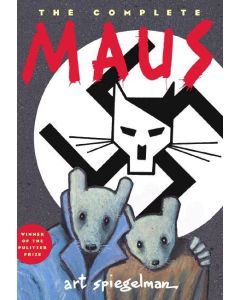
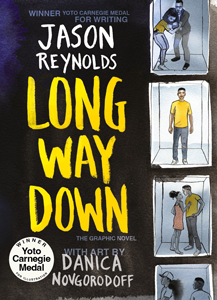
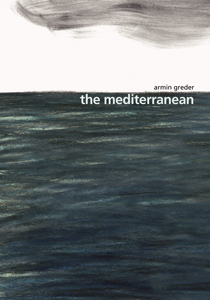
A wide reading quest could also include The Boy in the Striped Pyjamas, The Diary of Anne Frank, Sea Prayer and Armin Greder’s compelling books. Or you could include Song of a Blackbird in a wider unit which focuses on the graphic novel as a form. Check out our blogs on Long Way Down and Oxygen Mask. Texts like Maus and Persepolis would be valuable in such a unit.
Allen and Unwin have a Teachers Resource on Song of a Blackbird available.
Song of a Blackbird is a story of fiction, but it has a basis of real events. It combines two storylines and two contexts: one is set in 1943 Amsterdam and Emma Bergsma’s world witnesses Jewish families being forcibly deported to concentration camps. Emma is horrified and decides to join the Dutch Resistance. She is drawn into the fascinating and clandestine world of assisting the Resistance with counterfeit documents.
The other story is also set in Amsterdam but 2011 and Annick is desperately looking for a bone marrow donor for her grandmother. In the search it is revealed that her grandmother was secretly adopted as a child. Black and white prints hanging on the wall become the only clues to finding the lost family.
The dedication has a poignant resonance with current world events:
Dedicated to all children who suffer as a consequence of war and propaganda.
On p.25 this idea is further amplified:
The best defence against propaganda is CRITICAL THINKING. When we stop thinking, and QUESTIONING, we contribute to the lie.
What a wonderful justification for the role of our subject and your role in the classroom: critical thinking.
Maria van Lieshout was born and lived near Amsterdam, The Netherlands. Maria often spent many weekends in what is known as the Museum Quarter row house. In such a house Maria’s grandparents lived with her aunt who was an artist and her uncle, a metalsmith. It was common for Maria to draw while her aunt painted. Maria would write stories on the family’s typewriter. Eventually Maria travelled to the USA where she studied Visual Communications at George Washington University in Washington DC, and worked in design and innovation at Coca-Cola. In 2000, Maria became an illustrator full-time and since then she has illustrated and written several picture books.
Encourage students to flick through Song of a Blackbird: what do they notice about the specific features of this text?
List them so that you can return more deeply to these features.
Providing context for Song of a Blackbird is important to enrich students’ understanding and appreciation of this powerful story and its clever representation.
A few ideas
Written response
With close focus on Part 1 in what ways are we drawn into the narrative and context of Song of a Blackbird? Write about 500-600 words.
In our subject English “in what ways” is synonymous with “how” - this can include the characterisation, setting, context, ideas, imagery and in this text the combination of images is a critical component of the narrative. The work on the text’s exposition could become a scaffold for further close analysis.
Could the blackbird be a representation of the power of art (in this case song) to transcend the everyday, including the horrors of man’s inhumanity and the tragedy of war?
Note that the blackbird’s narrative sometimes involves personal commentary which is subjective: for example, “Mr Nijholt is an unconventional teacher. That’s why I like him.” and later where the blackbird explains about the eyes of the SS and the victims on p. 33 this draws our attention to the impact of fear and danger. Also look at the blackbird’s bold comments on p. 36 where he asserts a different role.
Once students have completed their reading of Song of a Blackbird divide the class into small groups and allocate different sections of the text to different groups to trace and track the ways the author uses the blackbird.
Pool each group’s findings as a single document like Google docs.
Task (either individually or as a collaborative task)
Students are invited to highlight the 10 most engaging and interesting points about the blackbird and use the groups’ research to answer this question:
How has Maria van Lieshout used the blackbird as a key motif for representation in her powerful graphic novel, Song of a Blackbird?
In an effective text the composer will explore ideas which then become more universal in their commentary about humanity. The best literature will be able to speak across time and place about the universal verities or truths about human nature and behaviour.
Song of a Blackbird may use very specific contexts but the ideas and themes can be applied across time and place.
It is important for students to be given agency to consider what the text says to them about broader human issues. The more we give students agency to think of their own insights the more we value their insights and encourage genuine personal responses.
Consider returning to small groups and each group is the discuss the ideas of the text which have wider application and become themes.
Share the groups’ ideas and if they have not included some of these add to the list:
The combination of visuals with written and printed text is superb. The visuals add a layered impact and serve an important role in propelling the narrative and exploring the key ideas.
Ask each group to choose two favourite double pages and explore the pages in terms of visual conventions. Students could talk to their double pages by transferring a photograph of their pages to the screen and unpack the specific features.
Revisit the key ideas of visual literacy
Written response:
The strength of a graphic novel is the combination of written text and images. It is an engaging vehicle for telling important stories and Song of a Blackbird is a story that needs to be told. With detailed reference to your chosen pages and two more from different groups, discuss how Maria van Lieshout has combined these written text and images to both tell her story and represent her key ideas.
Text requirements: Song of a Blackbird is a graphic novel text from around the world. It has cultural, social and gender perspectives, including from popular and youth cultures.
For more recommended texts suitable for Stage 5, explore our Year 9 texts and study guides and Year 10 texts and study guides.
Concepts could include Context • Representation • Connotation, imagery and symbol.
A student uses a range of personal, creative and critical strategies to interpret complex texts EN5-RVL-01
A student analyses how meaning is created through the use and interpretation of increasingly complex language forms, features and structures EN5-URA-01
A student evaluates how texts represent ideas and experiences, and how they can affirm or challenge values and attitudes EN5-URB-01
A student crafts personal, creative and critical texts for a range of audiences by experimenting with and controlling language forms and features to shape meaning EN5-ECA-01
(English K-10 Syllabus 2022 © NSW Education Standards Authority for and on behalf of the Crown in right of the State of New South Wales, 2023)


Jane Sherlock and Deb McPherson are experienced and passionate English teachers. They have also been involved in the education sector as authors and presenters at teaching conferences.
$9.95 flat rate shipping or free over $110
Australian family-owned & sourced
Supplier to over 1,000 schools Australia wide