



Flat Rate Shipping
$9.95 flat rate shipping or free over $110

Aussie Owned
Australian family-owned & sourced

School Supplier
Supplier to over 1,000 schools Australia wide
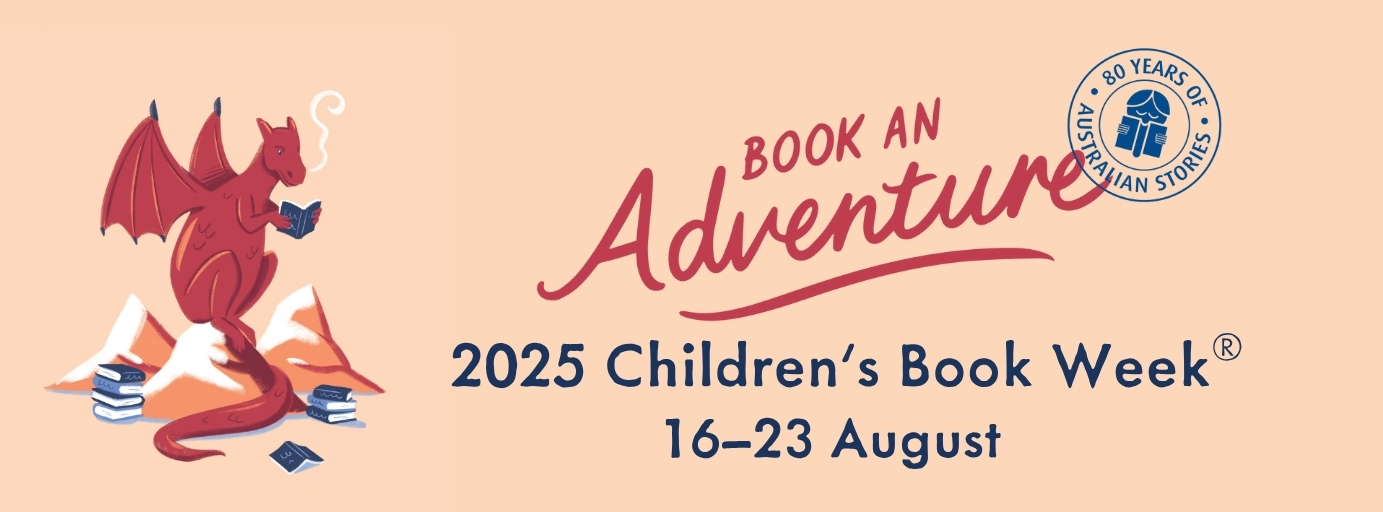
This year’s CBCA Children’s Book Week theme, “Book an Adventure!”, is all about discovering the joy of stories that take young readers on exciting journeys, whether across the world, into their own backyard, or through the pages of a book shared with family. In this blog, award-winning children's author Hazel Edwards reflects on creating stories that spark curiosity and confidence for children like her 6 year old grandson Arlo, who is just starting to read. From geckoes in Darwin to therapy dogs and quirky family moments, Hazel’s stories show that adventures don’t need to be epic to be meaningful. Real experiences, humour, and small everyday wonders can launch the biggest journeys for beginning readers.
Arlo is my 6 year old grandson. He is just starting to read.
Because he lives in Darwin and I live thousands of kilometres away in Melbourne, he reads to me on screen most weekends.
In-between, his parents read to him nightly. And in more than one language because there are Indigenous language books too.
And his school also teaches Indonesian.
For every book he reads during the week, he is credited with 1 minute of iPad playing time on Sundays.
At first, it was bribery. But now he’s keen to read anyway.
“I like stories about real stuff.’ he says. ‘And funny things.’
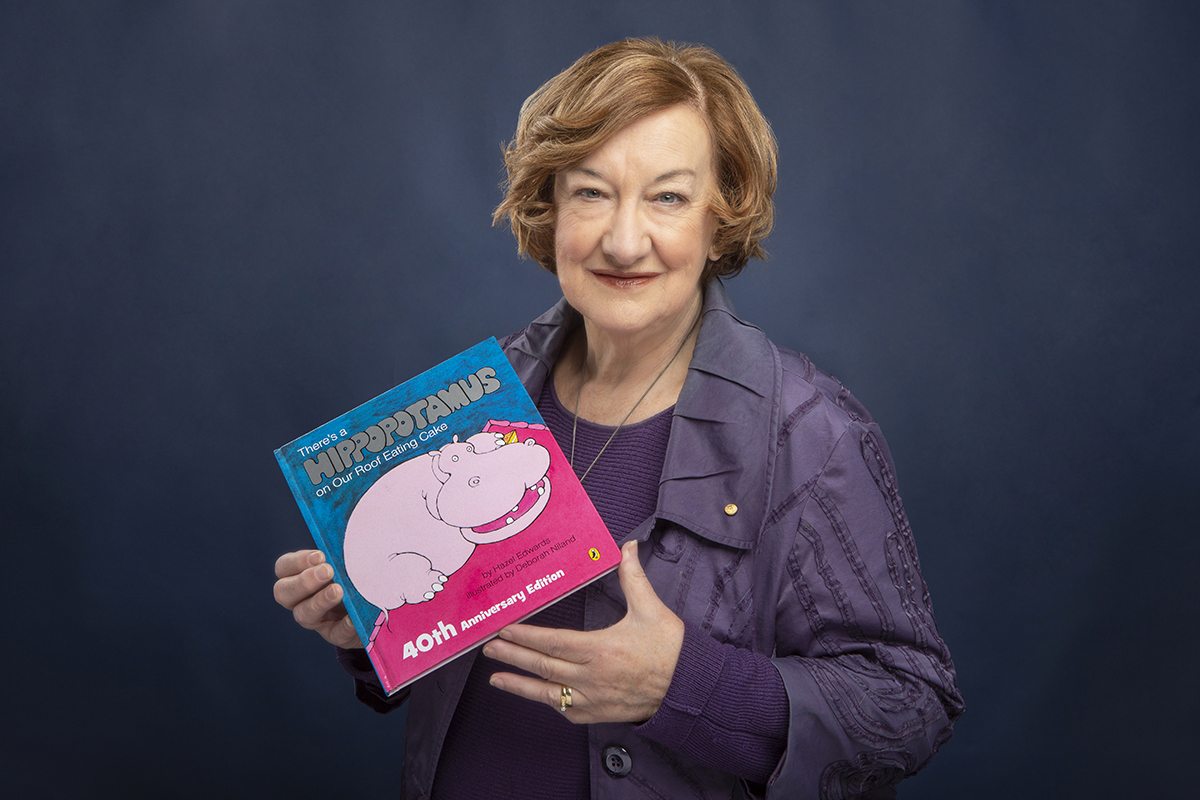
His father Trevelyan was the original 4 year old who inspired ‘There’s a Hippopotamus on Our Roof Eating Cake’ which is 45 this year.
When I looked back at my published stories I had written years ago when my children were younger, some were still relevant, others had dated.
Especially those with technology. And devices like Walkman. My family used to orienteer, but the clues I used in children’s mysteries with an orienteering setting didn’t work any more because today’s children would say, ‘Use a GPS.’
But humour doesn’t date. Especially quirky characters. Or how to make friends.
I have 4 grandsons. For each of their birthdays, I write a personal story, as a gift of the imagination. (Until they are old enough to write their own.)
Two years ago, I wrote ‘Go Go Gecko’ for the two little Darwin grandsons because geckoes are common in tropical houses, letterboxes and even dangling from their windows.
They had a personal, hand-made story copy with family photos. It was only for them, but a producer became interested in the story and wished to publish in various formats and languages.
Last month, I visited their Darwin school to read ‘Go Go Gecko’. In-between it had now been print and e-published, but with AI illustrations to protect the privacy of my grandchildren, online.
That was controversial. Check out the ‘Go Go Gecko’ case study of why A.I. was used: https://hazeledwards.com/book/go-go-gecko/
For a children’s author who writes a special story for a child in their family, publication is not the aim. Usually it’s to capture a significant or funny experience for that child.
But occasionally the specific becomes universal. Other children relate to the experience, whether it is about having a big, reassuring imaginary friend or an embarrassing moment.
‘Real stuff’ like how things work, or animals with ‘jobs’ like reading dogs or therapy pets really appeal to beginning readers even if the children do not have first hand experience. Reading reassures. Reading informs them what it might be like. Or takes them on adventures.
That’s why stories of other cultures or settings are important. Underneath is the reassurance that young people have the same needs.
Recently my 15 year old grandson lived with me while his parents were working overseas for a few weeks. In my study, he found the early stories I’d written about ‘Going Swimming’ when he was starting to read and swim and there was a chocolate frog on the last page...swim like a frog to eat after the swimming lesson and the reading.
‘I remember those stories’ he said. ‘Especially the one about your house having only a skylight and no chimney for Santa.’
That was the inspiration for the later ‘Ho Ho Ho There’s a Hippopotamus on Our Roof Eating Christmas Cake’. But it wasn’t written with that in mind. It was because of the kindness of a 6 year old offering the spare chimney at their older style house because his Grandma’s house lacked one. The logic of fantasy.
‘Honey the Hospital Dog’ (now out of print) based on the first therapy pet experiment at Caulfield Rehabilitation Hospital was one of the first ‘real’ stories I had published.
Illustrated with photographs of ‘real’ staff and patients (with their permission.) Honey was a guide dog reject because she was scared of traffic, but she was a much loved therapy pet by ALL the patients. And child readers lingered over the story because it was ‘real’. Honey was also part of a University of Melbourne Vet School study.
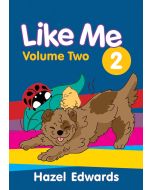
So my 'Like Me: Volumes 1 and 2' (Five Senses) are collections of short fact and fiction which I have posted off to my 6 year old in Darwin this week. There’s a status in reading chapter books. I’ll be interested to find out which stories he prefers. Or which personal stories he starts writing or drawing or telling because he realises that his world is worth writing about too. And that you can Read an Adventure.
I keep an ideas notebook (digital now) of unusual viewpoints or funny situations or phrases. Some stories are requests.
Hazel Edwards author website has an Easy Reading section: https://hazeledwards.com/book/like-me-volume-one-volume-two/
Free downloadable activities for Edward's books available at www.hazeledwards.com
$9.95 flat rate shipping or free over $110
Australian family-owned & sourced
Supplier to over 1,000 schools Australia wide